
Does menopause sleeplessness have you staring at the clock at 2 AM instead of enjoying restful sleep? Around half of all perimenopausal and menopausal women report disturbed sleep or insomnia during this transitional time— which is the clinical term for difficulty falling and/or staying asleep.1 The days of drifting off easily at bedtime may feel like a murky dream, but experts say there are steps you can take to navigate this stage while racking up more ‘zzz’s.
Here, Bonafide Chief Medical Officer, Dr. Alyssa Dweck, shares her advice about menopause night-waking, also known as nocturnal awakenings and what you can do to improve sleep during midlife.
What’s the Deal with Menopause and Waking Up in the Middle of the Night?
Perhaps you’ve lain in bed at night wondering, “Why do I always wake up at 2 AM in menopause?”
One key factor in menopause night-waking is hormonal fluctuation, says Dr. Dweck. Around age 40, estrogen and progesterone production can be quite volatile until your ovaries gradually produce less—these hormones both help to support sleep.2
Add night sweats, stress, and mood changes into the mix, she says, and we’re staring at a foolproof recipe for poor sleep in midlife.
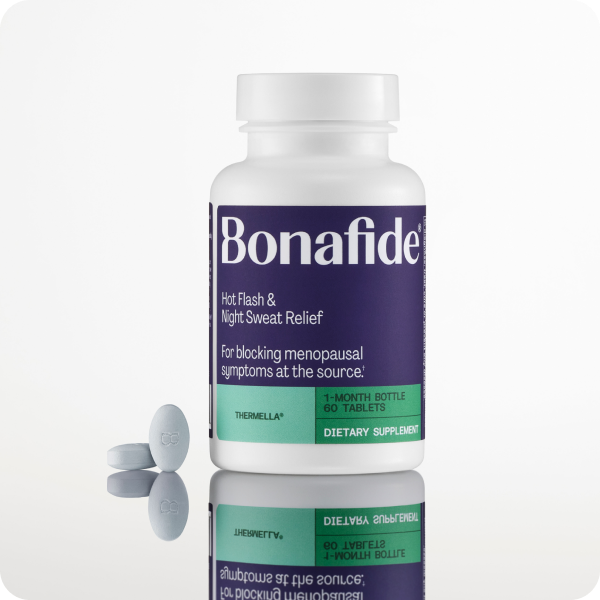
“When it comes to sleep disruption, the most frequently reported complaint in perimenopause and menopause is nocturnal awakenings, and early morning wakings with difficulty falling back asleep,” explains Dr. Dweck.
“In addition, changes in circadian rhythm and neurotransmitters, such as serotonin and GABA, are at play during the menopause transition,” adds Dr. Dweck. In other words, declining estrogen and progesterone levels may disrupt levels of serotonin (a happy hormone) and GABA (a calm neurotransmitter), further adding to possible poor sleep, she continues.3,4,5
How to Fix 2 AM Wake-Ups in Perimenopause
Is there anything you can do about menopause night-waking?
According to Dr. Dweck, the answer is yes.
For starters, Dr. Dweck recommends addressing vasomotor symptoms, more commonly known as hot flashes and night sweats. This means not only finding a way to address the root cause but also changing your external surroundings at bedtime to foster a cool, night sweat-friendly sleep environment.
“Management of vasomotor symptoms is beneficial to sleep, whether with hormone therapy, hormone-free drugs, or well-studied herbal supplements,” advises Dr. Dweck. “Keeping the sleep chamber at a cool temperature, wearing comfortable moisture-wicking sleep clothes, and considering a cooling mattress or bedding may help.”
Other scientifically-vetted ways to improve sleep hygiene include: 6
- Going to bed and waking up at the same times each day
- Hanging curtains or blinds that black out light
- Reducing noise or using a white noise sleep machine to mask sound
- Ensuring mattress, pillows, and blankets are comfortable
- Using the bedroom for sleep and intimacy only
- Keeping the bedroom around 65 F
- Avoiding caffeine and alcohol in the evenings
Additionally, Dr. Dweck suggests prioritizing mental health by learning to cope with stress and manage troubling thoughts throughout the daytime. Two powerful tools to accomplish this, she says, are CBT (a type of therapy that helps identify and alter thought patterns) and mindfulness.7
“Cognitive behavioral therapy (CBT) is effective for decreasing nocturnal awakenings to improve sleep and diminish daytime somnolence,” she says. “Mindfulness techniques can also be quite effective.”
When to Talk to a Healthcare Provider
Consistently interrupted sleep may negatively impact physical health, mental wellness, and cognitive functioning and has been linked with an increased risk for certain chronic illnesses.8 If your quality of life is suffering due to poor sleep, consider talking with a healthcare provider who can help identify the root cause and explore ways to help.9
FAQ Wrap Up
Here we’ll equip you with answers to two of the more commonly asked questions about perimenopause and night wakings—because sometimes understanding what’s happening in your body is the first step to feeling more in control on how to address it. From why these disruptions occur to what you can realistically do to get back to sleep, these quick answers are designed to help you navigate those restless nights and, hopefully, find your way back to sleep with a little more ease.
Why does perimenopause cause night-waking?
Perimenopause and menopause cause night-waking due to hormonal fluctuations and their associated symptoms, such as night sweats. Additionally, stress in midlife may play a role.10
How can I fall back to sleep at 2 AM?
To fall back to sleep at 2 AM, consider trying options for hot flash and night sweat relief, creating a cool sleep environment, addressing stress and mental health issues, and trying science-backed ways to improve sleep hygiene.11
Resources
- https://pmc.ncbi.nlm.nih.gov/articles/PMC11901009/
- https://pmc.ncbi.nlm.nih.gov/articles/PMC10117379/
- https://pmc.ncbi.nlm.nih.gov/articles/PMC5265922/
- https://lonestarneurology.net/others/how-hormonal-changes-during-menopause-affect-brain-health/
- https://my.clevelandclinic.org/health/articles/22857-gamma-aminobutyric-acid-gaba
- https://www.health.harvard.edu/staying-healthy/sleep-hygiene-simple-practices-for-better-rest
- https://www.apa.org/ptsd-guideline/patients-and-families/cognitive-behavioral
- https://my.clevelandclinic.org/health/diseases/23970-sleep-deprivation
- https://www.ncoa.org/article/menopause-and-sleep-what-every-woman-should-know/
- https://www.ncoa.org/article/menopause-and-sleep-what-every-woman-should-know/
- https://www.womenshealthmag.com/health/a64245554/menopause-insomnia-tips/