Have you found yourself tossing and turning in bed, utterly sleepless on a hot summer’s night? Or can you relate to the feeling of slipping beneath warm, cozy sheets on a chilly evening, only to find yourself quickly overheating?
If either of these scenarios sounds familiar, science can explain why, says Bonafide Chief Medical Officer, Dr. Alyssa Dweck. And for women in menopause, she adds, there are even more variables at play that may impact sleep.
Here’s what Dr. Dweck had to say about the science, and importance behind sleep and temperature regulation. Plus, she shares some quick tips for improving sleep comfort for menopausal women.
Temperature and Sleep Quality: What’s the Connection?
Regardless of age or sex, experts say sleeping in a cold room helps the body produce the sleep hormone melatonin, which promotes improved sleep.1 If you’re a woman navigating perimenopause or menopause, however, it may not be that simple, according to Dr. Dweck. While the rest of the population may find it easy to rest at a comfortable 60 to 67 degrees Fahrenheit, women in menopause may struggle to find such a sweet spot, she explains.2
Menopause Explained: Why Women Overheat at Night
“Estrogen directly affects the thermoregulatory zone in the hypothalamus of the brain, , the body’s internal thermostat. – Declining estrogen narrows the window of comfortable temperature,” says Dr. Dweck.
As the production of estrogen—a reproductive hormone made by the ovaries— becomes volatile during the menopause transition, thermoregulation is altered, which often causes nighttime hot flashes, commonly referred to as night sweats.3 Dr. Dweck explains that declining estrogen impacts estrogen receptors in the brain, leading to the phenomenon we know as night sweats.
"Declining estrogen similarly affects specific NKB (neurokinin B) receptors in the brain, leading to vasomotor symptoms (VMS),” says Dr. Dweck. “Low estrogen is also associated with an imbalance of GABA (gamma-aminobutyric acid) and glutamate receptors in the brain, which can disrupt sleep.”4
Estrogen isn’t the only hormone at play, she adds. Its decline signals a shift in levels of other hormones and neurotransmitters that may impact sleep, too.
Production of melatonin, a hormone related to circadian rhythm, is also affected by decreased estrogen,” says Dr. Dweck. “Decreased ovarian production of progesterone, a calming hormone, also affects sleep.”
Medical Note: If you’re experiencing night sweats along with other symptoms—like fever, unexplained weight loss, or a persistent cough—it’s important to see a healthcare provider to rule out causes unrelated to menopause.5
Sleep Temperature Regulation: Nighttime Cooling Tips for Women
Fortunately, not all hope for a good night’s sleep is lost during menopause. Dr. Dweck has a few evidence-based nighttime cooling tips for women in midlife to consider.
Create a Cooling, Menopause-Friendly Sleep Environment
Dr. Dweck points to research suggesting that a cooling mattress or mattress pad may help to reduce night sweat frequency, sleep disturbance, and vasomotor symptom interference with daily activities.6 The study she references found that women who used a cooling mattress experienced a 52% reduction in vasomotor symptoms over an eight-week period.7
Other nighttime cooling tips for menopausal women backed by science include: 8
- Using lightweight, moisture-wicking pajamas and bed linens
- Wearing layers and shedding them as a night sweat approaches
- Having water nearby
Mental Health Interventions May Help
“Newer research shows hormone-free options focusing on behavioral interventions may significantly reduce hot flashes,” explains Dr. Dweck.9
“The Menopause Society suggests that both cognitive behavioral therapy (CBT) and hypnosis are evidence-based interventions that may help ease vasomotor symptoms,” she adds.
Researchers in the study found that hypnosis reduced hot flash frequency by more than 60% while improving quality of life, sleep quality, and mood.10
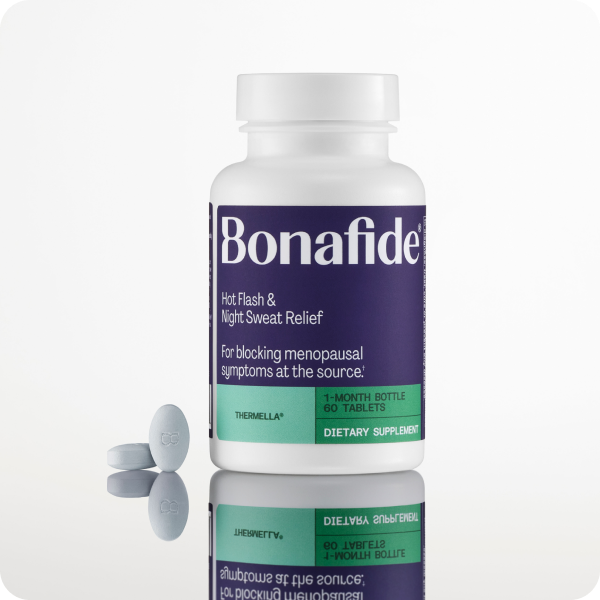
Supplements for Night Sweat Relief May Make a Difference
Although many supplements for hot flash relief are available, Dr. Dweck encourages women to do their due diligence on well-researched, reputable brands and talk with a healthcare provider for guidance.
Medications for Menopause Sleep
Finally, Dr. Dweck mentions that medications—for improved sleep in menopause, do exist. She encourages women considering the prescription medication route to discuss options with a trusted healthcare provider.
“Prescription medications, such as gabapentin, are effective for night sweats and may induce drowsiness, while oxybutynin may minimize VMS and the need to awaken to urinate” says Dr. Dweck. “Additionally, both hormone therapy and NKB antagonists are FDA approved to manage hot flashes and night sweats due to menopause.11,12
Sleep Comfort for Menopausal Women Is Possible
Menopause may impact the body’s capability to cool down, but achieving sleep comfort during menopause is possible. Women may find improved sleep by creating a cooler environment, seeking mental health intervention, and considering supplements and/or medication for relief.
Resources
- https://www.health.com/sleeping-in-a-cold-room-8747210
- https://health.clevelandclinic.org/what-is-the-ideal-sleeping-temperature-for-my-bedroom
- https://www.jeffersonhealth.org/your-health/living-well/sleeping-hot-how-to-sleep-well-during-menopause
- https://my.clevelandclinic.org/health/articles/22857-gamma-aminobutyric-acid-gaba
- https://www.mayoclinic.org/symptoms/night-sweats/basics/when-to-see-doctor/sym-20050768
- https://pubmed.ncbi.nlm.nih.gov/35881974/
- https://pubmed.ncbi.nlm.nih.gov/35881974/
- https://www.ncoa.org/article/menopause-hot-flashes-9-tips-for-staying-cool-naturally/
- https://menopause.org/press-releases/clinical-hypnosis-vs-cognitive-behavioral-therapy-whats-better-for-managing-hot-flashes
- https://pmc.ncbi.nlm.nih.gov/articles/PMC11773179/
- https://jamanetwork.com/journals/jamainternalmedicine/article-abstract/2833235
- https://www.mayoclinic.org/drugs-supplements/oxybutynin-oral-route/description/drg-20065229