

You’ve likely seen portrayals of sexless marriages after menopause in movies.
Despite myths and misinformation that might say otherwise, most women don’t suddenly lose interest in sex just because they reach menopause. But for many, menopause can make sex look and feel pretty different. Navigating intimacy after menopause may take some work – and talking with your partner is an important part of the process.
Though it’s not always simple or straightforward. For many women, communication around intimacy in marriage can be intimidating or even embarrassing. If you’re looking for some advice on how to improve intimacy after menopause through communication with your partner – and why it’s so crucial to do so – read on.
Your Sex Life During Marriage and Menopause
More than three-fourths of middle-aged women say that sex is moderately or extremely important to them, according to data from the Study of Women’s Health Across the Nation (SWAN) initiative.1 What’s more, it’s been shown that women who engage in intimate activity with their partners have better emotional well-being and a higher quality of life.2 In short, intimacy after menopause is a key component of feeling good, no matter your age.
That said, many (but not all) women notice a change in their sex life during menopause. For most women, it’s not so much that menopause lowers their sex drive, explains Dr. Suzanne Hall, an OB/GYN, who specializes in sexual health. Rather, symptoms and side effects caused by menopause can make sex less enjoyable and satisfying, and in some cases, indirectly result in a woman becoming less interested in sex.
Some menopause sexual side effects can include:
- Pain or discomfort.As levels of the hormone estrogen drop during perimenopause and menopause, vaginal tissue can become drier and less elastic, making sex painful.
- Hot flashes or night sweats. Both can disrupt your sleep during menopause, leaving you with less energy during the day. And when you’re sluggish or fatigued, you might be more interested in trying to get some sleep than having sex.

- Emotional changes. Depressed moods and anxiety become more common in mid-life, Dr. Hall explains. Hormonal swings, too, can make you more prone to stress or anxiety.

- Weight gain.It’s not guaranteed during menopause, but many women find it becomes harder to maintain their weight. “Women often feel less sexual when they aren’t at their ideal weight,” explains Alyssa Dweck, a practicing gynecologist and Chief Medical Officer at Bonafide.
- Health problems. “As women age, we’re more likely to deal with chronic health problems like high blood pressure, diabetes, arthritis, or cancer. And sometimes, having these problems at the forefront [of our minds] can diminish interest in sex,” continues Dr. Dweck.
Improve Intimacy After Menopause
Sex doesn’t stop at menopause. Many women maintain thriving sex lives during middle age and beyond. Others may gravitate towards showing love and cultivating closeness in other ways.3 The bottom line: There’s no one definition for what intimacy should look like during and after menopause.
That said, maintaining a satisfying sexual relationship during menopause can sometimes be easier said than done. After all, it can be hard to look forward to sexual intimacy if you anticipate that it’s going to hurt, or you just aren’t feeling your best overall.
There’s hope, though. If you aren’t getting what you want from sex right now, there are steps that you can take – both individually and as a couple – to make it feel better and more enjoyable.
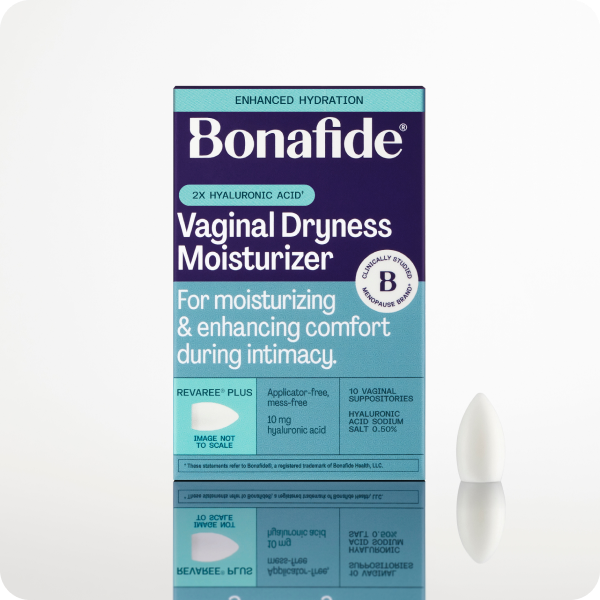
If you’re struggling with vaginal dryness or pain in particular, start by talking with your gynecologist. Vaginal lubricants can help make sex more comfortable in the moment. Non-hormonal vaginal moisturizers, like Bonafide’s Revaree® Plus go a step further by helping to restore moisture to vaginal tissues with time and consistent use. For some women, topical hormonal therapies can also be a good choice. Always be sure to speak with your healthcare provider to determine the best solutions for you to help improve intimacy after menopause.
At What Age Does a Woman Stop Being Sexually Active?
This question comes up time and again and the reality is–whenever she chooses (if ever).
Being physically active during menopause can actually help boost your sex life. Even if you’re feeling sluggish, regular exercise has the power to boost your mood and your energy levels, as well as help you feel better about your body. And all of that can contribute to a more satisfying sex life.
Finally, don’t feel like you need to go through this alone. Being open with your partner about what you’re experiencing – and working together to find solutions – won’t just make sex more comfortable; it’ll likely serve to bring you even closer together.
How to Talk About Sex with Your Partner
Conversations about sex don’t always come easy. But when it comes to sex after menopause, communicating what you’re feeling – both physically and emotionally – matters. “Your partner can’t necessarily read your mind,” Dr. Dweck says.
In fact, emotional support is a key predictor of overall sexual functioning in middle-aged and older women, research shows.4 When you feel like your partner is on the same page as you, satisfying sex becomes something you can explore together – rather than something you have to figure out on your own.
Intimacy during menopause can look and feel different. If starting a discussion about sex feels uncomfortable or difficult, these strategies can help.5
- Have short, ongoing conversations. Sitting down to hash out every sexual issue in one setting can feel overwhelming. Instead, try setting a timer to talk for just 15 or 20 minutes. You can both take time to digest what’s been said and come back to regroup later.
- Be direct about what you’re feeling. If vaginal dryness is making you physically uncomfortable, say so. More often than not, your partner also often worries if anything may be causing you pain, according to Dr. Dweck. If you’re feeling less comfortable and it’s affecting your libido and experience, bring it up! Communicating openly will enable you to figure out a solution that works for both of you.
- Explore what would help you feel more comfortable. Many women find that they need to spend more time on foreplay to feel fully aroused during and after menopause. You can also experiment with different positions to find what feels best. “It’s important to directly communicate likes and dislikes in the bedroom with your partner since oftentimes, with age, changes in preferences can occur,” Dr. Dweck says. If you feel uncomfortable or embarrassed, keep in mind that your partner wants to hear about what they can do to make sex more pleasurable and fun.
- Make room for other kinds of intimacy. Oral sex, massage, cuddling, or experimenting with vibrators can be satisfying alternatives to penetrative sex that may feel better for your body. Don’t be afraid to try them. You might find that adding new forms of intimacy to the mix during menopause can bring you and your partner even closer together.
- Loop in an expert. Bring in a neutral third party if you’re having trouble figuring out where to start the discussion or it feels like you and your partner are having trouble communicating.” A mental health provider, sex therapist, or even your gynecologist can help you facilitate the conversation,” Dr. Dweck advises.
Even if you’ve been together for years or decades, bringing up sexual issues that may come along with menopause and talking about your evolving sexual needs and wants with your partner can feel like a big step. Just remember that the benefits of a more satisfying sex life are worth it – and so is your comfort.
Resources
- https://pubmed.ncbi.nlm.nih.gov/14533021/
- https://www.ncbi.nlm.nih.gov/pmc/articles/PMC5994393/#R6
- https://www.menopause.org/for-women/sexual-health-menopause-online/frequently-asked-questions
- https://www.researchgate.net/publication/331709036_Psychobiological_Factors_of_Sexual_Functioning_in_Aging_Women_-_Findings_From_the_Women_40_Healthy_Aging_Study
- https://www.mayoclinic.org/healthy-lifestyle/sexual-health/in-depth/womens-sexual-health/art-20047771






Comments
Post commentGreat article. Written in easy terms and no guilt. A complete understanding.