
Want to print this article for later? Click here.
Many women may wonder, can you have intercourse during menopause? Intercourse after menopause can change in a variety of ways. Some of these changes — like decreased arousal and libido after menopause— may be directly tied to the hormone fluctuations commonly experienced. But there may be other factors affecting your sex life as well.
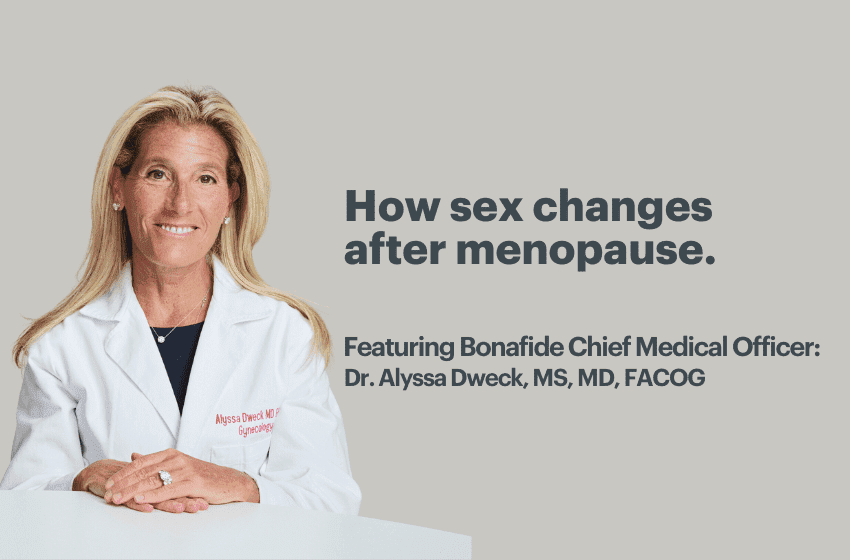
In this video, Bonafide Chief Medical Officer, Dr. Alyssa Dweck talks about common changes in intercourse during menopause and lays out potential causes and treatments.
Video Summary
Is Intercourse the Same After Menopause?
It should really come as no surprise that your sexual intercourse after menopause may not be the same as it was in your twenties. This can be really dramatic and disconcerting for some women. It’s really important to bring up this change in libido during menopause to your healthcare provider during your routine exam, or during a problem-focused visit. By the same token, your healthcare provider should elicit this information in a direct but open-ended way, so that they can assist if needed.
First, women tend to complain about a lowered sexual drive or libido during menopause, in addition to vaginal dryness and even orgasm concerns, like weakening or absence during this transitional period. Discomfort during intercourse after menopause is common, too.
Who better to address these concerns than your gynecologist?
How Sex Changes After Menopause
The first thing to recognize is that sexual desire and female arousal after menopause is complicated for women. It’s just not a simple light switch that goes on and off, but rather has a lot of different variables. For example, if your relationship is strained or there’s discord going on in your marriage, this is going to affect your libido, and is probably best helped with a mental health provider or counselor.
Second, if you have chronic medical issues or are taking medications that might interfere with your libido during menopause, these things need to be addressed as well.
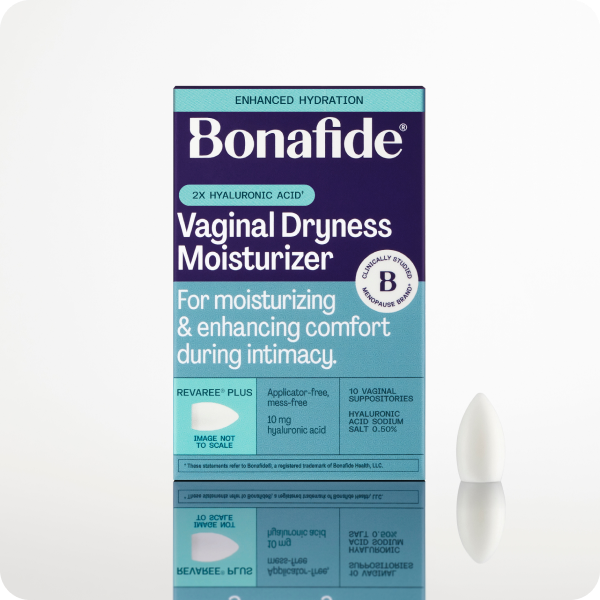
Third, if you’re suffering with vaginal dryness and subsequent pain as a result of low estrogen levels during menopause, it behooves you to use a vaginal moisturizer. I’m a huge fan of Revaree® Plus from Bonafide®. This is a hyaluronic acid suppository, a super moisturizer used twice a week in the vagina to help with moisture, and it is not hormonal. Lubricants may also be quite helpful, especially during intimacy to improve intercourse after menopause.
If you suffer from a busy mind, where you just have so many tasks to perform and so many responsibilities that it’s causing undue stress, you’ll need to manage this: whether it’s with exercise, altering the diet, or meditation or mindfulness to help de-stress and bring you more into the present.
Finally, orgasm issues do plague many menopausal women, where they become weaker or they become nonexistent. Part of this is due to hormonal change, and part of it is due to managing discomfort. We’ve already spoken about moisturizers, which I think are quite helpful, but from time to time you must consider the blood flow being enhanced in the genital area to assist with arousal and sexual satisfaction after menopause.
For this, I often recommend Ristela®, a dietary supplement whose antioxidant and amino acid combination helps to enhance blood flow to the genitals to enhance satisfaction and female arousal after menopause.*
I hope all of these are of help to you. Thanks!







Comments
Post commentGreat products! I’m glad my gym recommended.
Great articles and video.
Revaree Plus made a noticeable difference for me. Thank you for providing this helpful product.
I’m in perimenopause and my sex drive died. I called my OB and she suggested Ristera and it has been such a game changer. With my HRT and this I feel like myself
I am so grateful my gynecologist recommended these products, they definitely improve overall vaginal health especially during perimenopause.